We use cookies to make your experience better. To comply with the new e-Privacy directive, we need to ask for your consent to set the cookies. Learn more.

WRX and STI Differential Upgrades and Tuning
November 01, 2021
In an all wheel drive car, power is sent to all four wheels through your drivetrain. Because you are sending driving force to all of your wheels, one of the main benefits of an all wheel drivetrain is that the car always feels like it has lots of grip, regardless of the driving surface.
If you have an all wheel drive Subaru like the WRX or STI, your car has 3 differentials that determine how your power is distributed to the wheels. There is a front differential that determines the split between the front two wheels, a center differential that determines the split between the front and rear axles, and a rear differential that determines the split between the rear wheels.
Even though the drivetrains are nearly the same between the WRX and the STI, but if you drive each of them, they feel different. The STI feels like it has a lot more grip and like the STI's drivetrain is able to distribute that driving force much more effectively than the WRX.
The reason for this is that the STI has much better differentials than the WRX.
There are a number of up-grade options for your WRX to improve your differentials, and there are options for the STI as well.
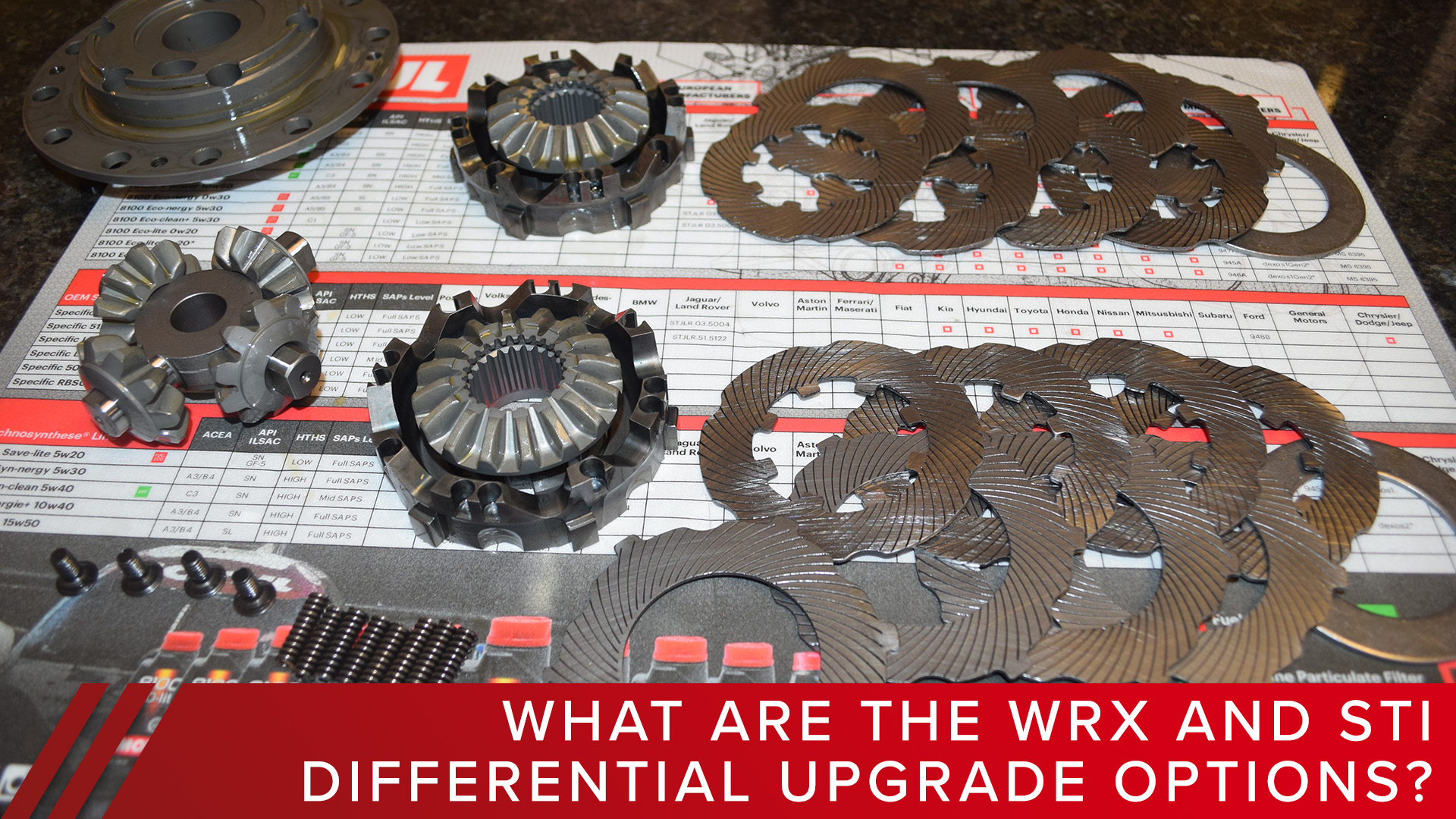
In this video we talk about the difference between gear type or torsen differentials and clutch type differentials (also known as limited slip differentials or LSD's), and where and when you would want to upgrade your stock differentials to improve your drivetrain.
There are 4 main types of differentials:
Open
This is the most common differential, and it only sends driving force to one most of the time. These differentials don't have any ability to distribute power between each wheel, and are not ideal for performance. They are great if you want to start a one tire fire though. Figure "One's" for days.
Viscous
This differential uses a viscous coupling to distribute power to both wheels. It will balance the power between the wheels, but because it uses a sticky fluid to grab the clutch disks, it can't lock 100%. The main downside to these differentials is that they tend to wear out and grab less as they age. They are great for street use, but generally they are not ideal for aggressive track use because they aren't as effective at distributing power at higher levels, or with race tires.
Torque Biasing/Torsen/Gear Type differentials
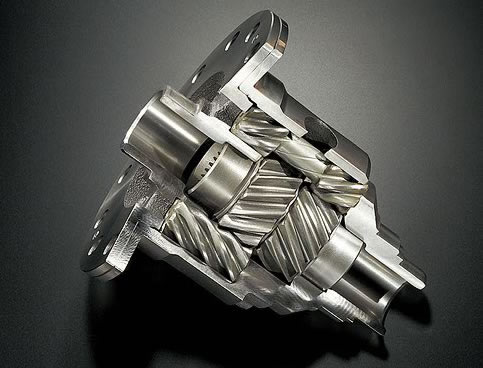
These differentials use gears to connect each wheel to the differential. This means that this differential can evenly distribute all of the driving force sent to it between each of those wheels in most conditions. The advantage of a Torque Biasing differential is that it distributes torque proportionately. The wheel that has more traction gets as much torque as it can handle, and the rest goes to the other wheel. This means that your car will not move from its cornering line as you get on the accelerator, and this makes the car feel like it has tons of grip.
The STI has used front and rear torque biasing differentials from 2007 on.
The only issue with a torque biasing differential is that if one wheel has no traction, on ice or snow, or if you lift a wheel in a corner for instance, then the torque biasing differential reverts to behaving like an open diff. This can make it less than ideal for aggressive track use, or for high power cars where full power can break a tire lose (typically up front on corner exit is where this would happen first).
The other key detail worth noting is that the torque biasing differential does not act under engine braking or deceleration. It is only acting under acceleration to control power delivery to each wheel.
Clutch type or Limited Slip Differentials (LSD's)
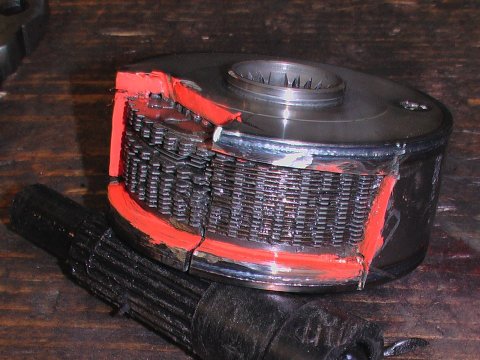
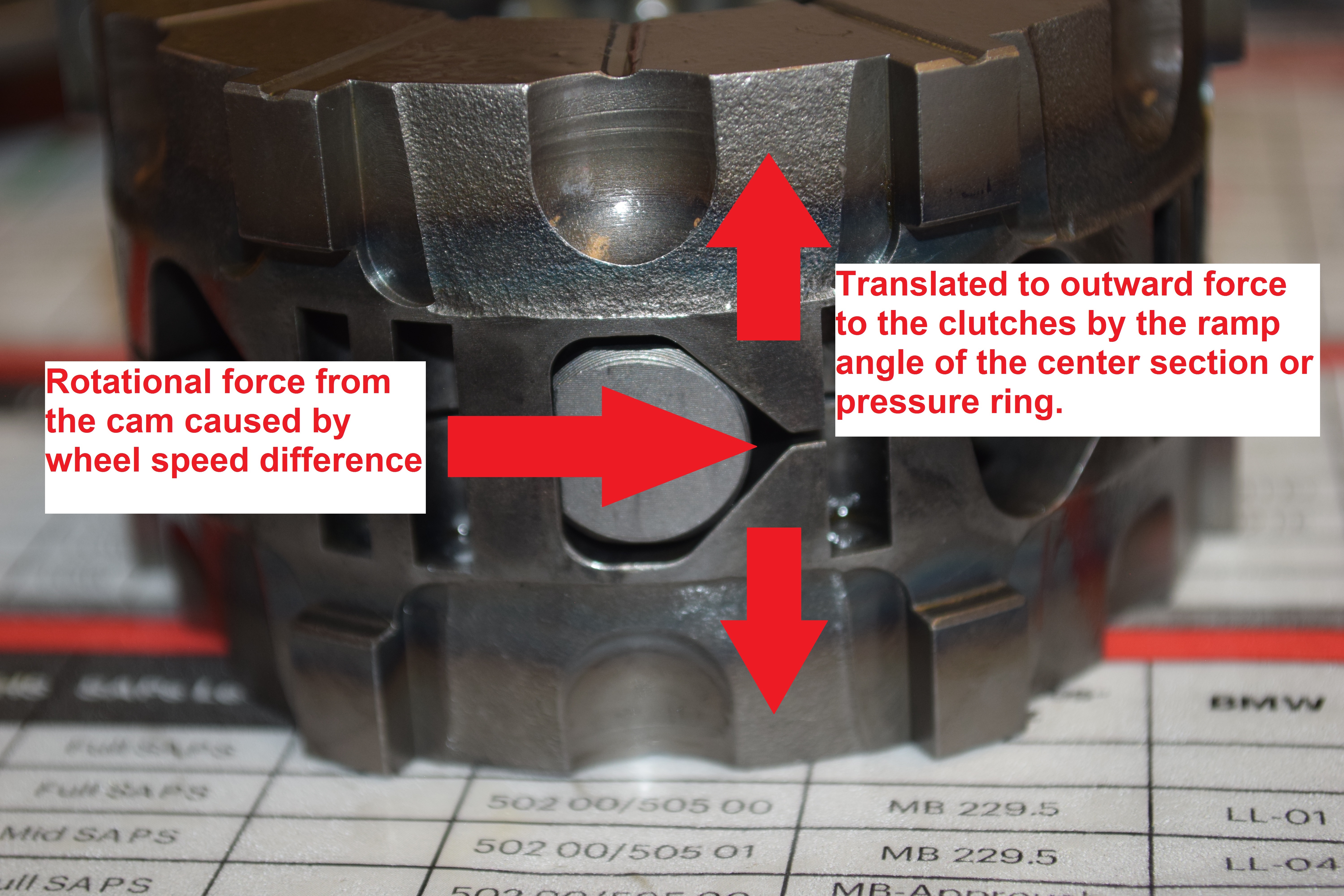
A clutch type limited slip differential uses a series of clutch plates on each wheel that are engaged by either pre-load springs and/or the rotation of its center planetary gears which through a ramp angle in the center of the differential. This type of differential is able to ramp up to 100% lock, which locks the left and right wheel at the same speed, and will deliver the same amount of driving force to each wheel.
The mechanism that does this is somewhat complicated, and we have a video going into detail of exactly how that mechanism works.
For street use, a clutch type LSD can be somewhat noisy, and can have a tendency to lock up to aggressively. For that reason, for street application, these differentials tend to be softened to reduce these issues. The 2004 - 2005 USDM STI had clutch type differentials in front and back for instance.
For high power and aggressive track use, there are some significant benefits to a clutch type LSD though. They can be tuned to work under both acceleration and deceleration, and how the rate that they lock up can also be tuned. This makes them ideal in those situations because you can optimize how they work which lets you set up the drivetrain to work exactly how your driver wants or prefers.
Thanks very much for watching, and if after watching our videos on differentials you still have any questions about what option would be best for you, please contact us through Live Chat on this site.
Stay Tuned!

Share on Facebook

Share on X

Share on Pinterest