We use cookies to make your experience better. To comply with the new e-Privacy directive, we need to ask for your consent to set the cookies. Learn more.

How to pick a new Turbo
October 25, 2021
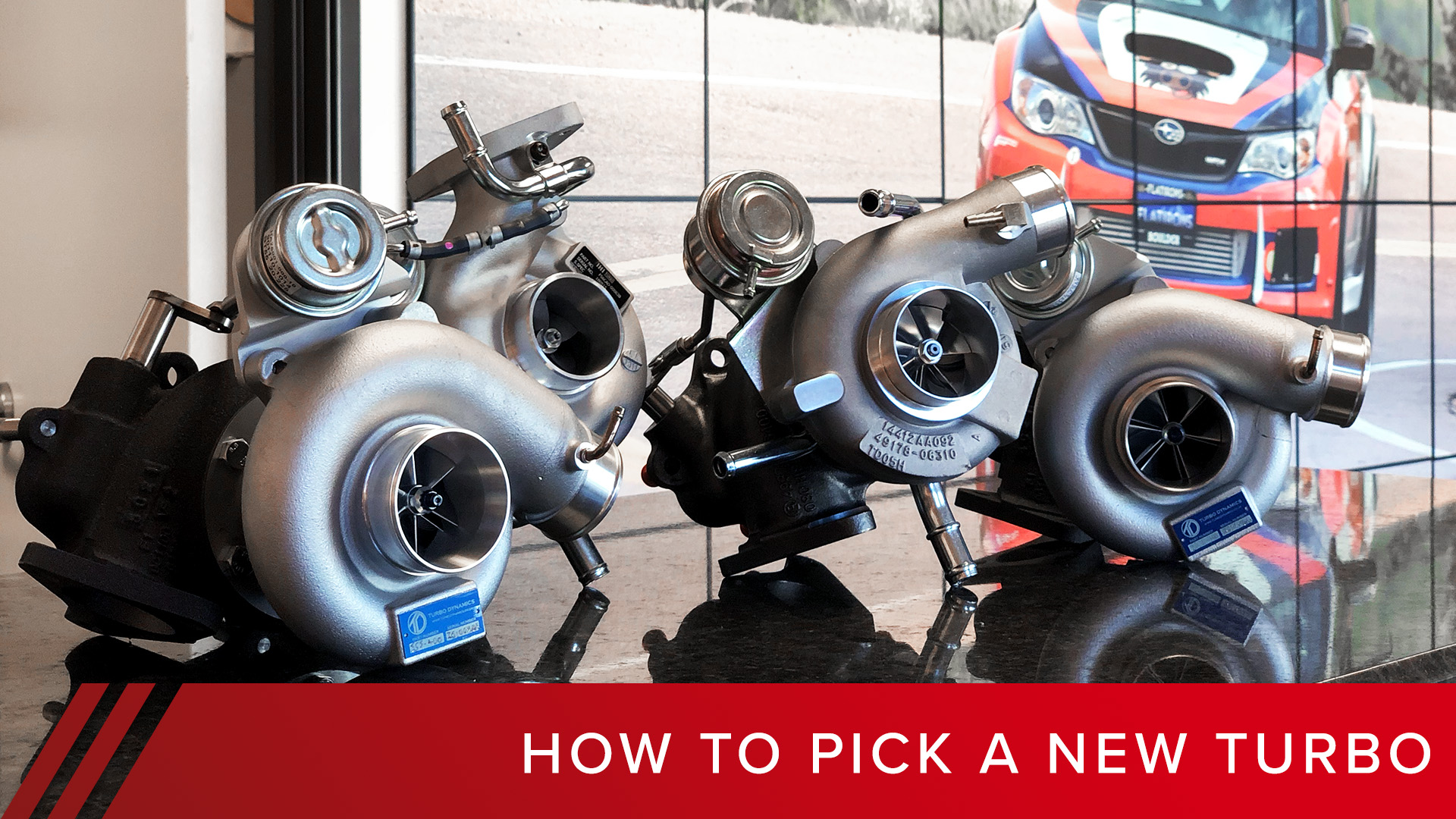
If you have a Subaru WRX, STI, or any Subaru that came with a turbocharged engine for that matter, there is a good chance that sooner or later you are going to consider putting on a new turbo. The most common goal when looking for a new turbo is to make more power, but there could be other motivations as well.
There is a lot to consider when making this decision, so I wanted to put together a blog to help walk you through the process in the hopes that you make a good choice and get a turbo that you are happy with in the end.
Do you really want a bigger turbo?
Most of the time, people start looking for a new turbo for two reasons. The first is as a part of a build with the goal of making more power since a bigger turbo is a key part of that formula. The other common reason is that they have had a failure of some type that needs a new turbo to get the car up and running again.
In the case where you need to put on a larger turbo to achieve your build goals, you definitely want a bigger turbo.
But if you are just trying to get your car running, this is a tougher question. The first consideration is budget. If you have had a failure that requires replacing some expensive parts like the short block, or cylinder heads, you have to make sure that you take care of all of your "needs" before you get something like a bigger turbo. The other part of this is that most of the time you can't simply bolt on a larger turbo and have your car run properly. At a very minimum you would need to tune the car to run properly with the new turbo, but it also most likely needs supporting parts to actually allow you to take full advantage of the potential in the new turbo.
If your budget doesn't allow you to have your car properly tuned for the new turbo, and especially if your budget doesn't allow you to install the proper supporting parts to let you take advantage of the larger turbo, your best bet is to stick with your stock turbo (or a new stock turbo). That way you can get your car running again properly, and then you can come back and put on the larger turbo later when you can do that install properly.
Can I just bolt on a bigger turbo and make more power?
The short answer here is no. Or at least, not exactly. What you have to keep in mind here is that the reason that a larger turbo can make more power is that it can flow a higher volume of air and because it can make boost pressure more efficiently than a smaller turbo. This efficiency is a key difference that often goes overlooked.
Generally speaking, a smaller turbo will make a moderate amount of boost, let's say 18 psi for example, less efficiently than a larger turbo. What this means is that the smaller turbo will have more friction with the intake charge as it creates this pressure, and with that friction comes more heat. So there will be a higher percentage of that 18psi intake charge that is coming from the fact that the air has been heated up. A larger turbo can make that boost pressure more efficiently, which means that a higher percentage of the 18 psi intake charge is created by packing in more air molecules into the charge than the smaller turbo.
That means that the intake charge from the larger turbo in this example has more usable air. That is why it can make more power, but that also means that you need more fuel to be able to make use of that denser intake charge.
What supporting mods do I need for a bigger turbo?
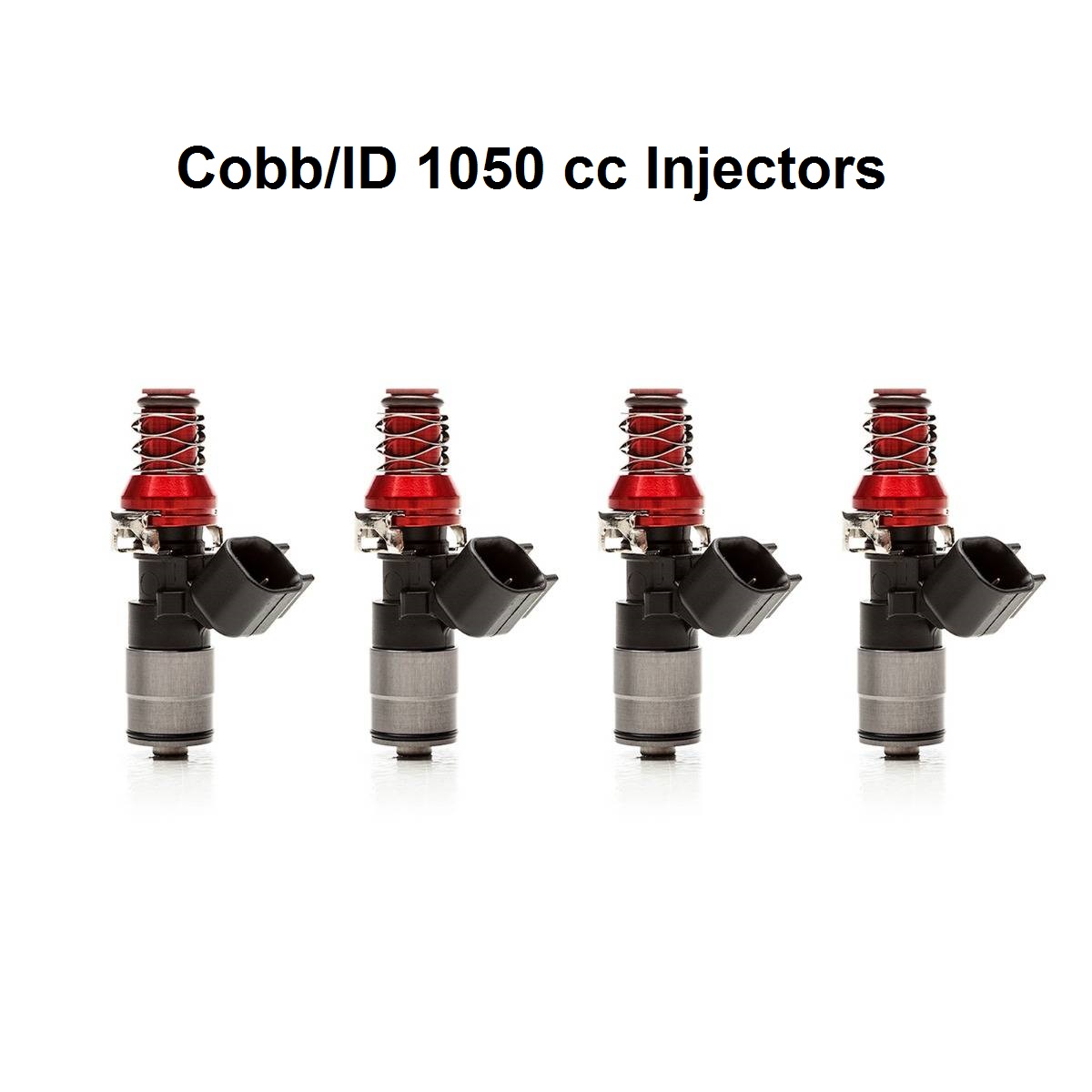
This is why you need supporting parts to be able to take full advantage of a larger turbo. Those are bigger fuel injectors to inject more fuel, and a larger fuel pump to supply the larger injectors. Beyond that, you may also need or want a larger intercooler to handle the intake charge coming from the larger turbo as well. Having all of these parts in place when you tune your car for your new turbo means that you will see the maximum gains from the new turbo.
If you install a larger turbo without those supporting parts, most likely the amount of boost pressure, and therefore power, that you can make will be limited by your fuel system. In this case, your tuner will most likely have to stop when your injectors get close to their maximum duty cycle. This will almost certainly be at a much lower power level than you would see if you had properly sized injectors. The other thing to consider is that if your injectors are normally running near their maximum capacity, you are also removing your car's ability to add fuel if it sees a condition where more fuel is needed.
What does it mean for a turbo to be "bigger" for that matter?
When you are looking for a bigger turbo to make more power, typically "bigger" means that the new turbo would be able to flow a larger amount of air more efficiently. That is what makes more power. But it can also refer to the physical size of your turbo, and it can specifically refer to the size of the hot side of the turbo. The flow rate, physical size (from an installation standpoint), and the size of the hot side of the turbo are all things to consider when picking a new turbo because they will give you a good indication of how the turbo will work on your car.
When picking a turbo for my power goal, is a bigger turbo better than a smaller turbo?
Believe it or not, with all of that in mind, generally smaller is best when picking a new turbo, not bigger.
When you put on a larger turbo that is capable of making more power, you are making a compromise. The way that you will feel that compromise the most is how responsive the turbo is at a given rpm. The larger the turbo, the less responsive it will be at a low rpm because it needs the engine to be flowing a higher volume of air to get it to start working efficiently.
The larger the compressor wheel is (and the turbine wheel for that matter), the more exhaust flow it will take to get them spinning fast enough to make a pressure. The larger, or more open the hot-side of a turbo is, the less restrictive it is. This is great for top-end power when your engine is spinning fast, and therefore moving a high volume of air, but it also means that your engine has to be moving more air to get the turbo spinning in the first place which hurts low-end performance.
Peak Power v. Drivability
If your power goal is 400 wheel horsepower, but you pick a turbo that can flow enough volume and has a large enough hot-side to make 600 wheel horsepower, you are making much more of a compromise than you need to in order to make that power target. That means that in turn, you are losing more low- and mid-range performance than you need to in order to make the peak power that you want.
What this can feel like is having to stay at wide-open throttle much longer than you want to get the car to start moving, and it can also make the car feel much less responsive than it did with a smaller turbo. That can make the car a lot less fun to drive, and at an extreme, it can be such a drastic change that the car can feel almost undrivable.
With all of this in mind, the best way to make the least amount of compromises but still get to your power goal is to pick the smallest turbo that will get you to that goal. And if you do want to have 2 separate maps for two different power targets, it would be best to keep those two targets as close together as possible. The bigger the difference between a high power and low power map, the more likely it is that one of them will work much better than the other.
Don't forget about your engine and transmission when you set your power goal
Last but not least, don't forget about your engine and transmission. Having a turbo and sufficient fueling to make 500 wheel horsepower won't be fun for long if you have a catastrophic failure somewhere else. When you are working on your planned build, the best place to start is with a power goal that your engine and transmission can handle so that when you reach that goal, you won't have to worry about breaking something shortly after.
This is especially important if you have a stock engine or a 5-speed transmission. We have blogs about the limits of each of those, as well as the limits of the 6-speed transmission as well. Definitely take a look at that information if you are running those parts before you set your power goal and pick your turbo.
Click here for our blog on the limits of the EJ257 engine
Click here for our blog on the limits of the WRX 5-Speed Transmission
Click here for our blog on the limits of the STI 6-Speed Transmission
What turbos would we suggest for a given power goal?
For the EJ25 engine, we have definitely found a handful of turbos that work well for certain power goals.
VF48 HF - 300 whp pump gas / 340 whp on E85
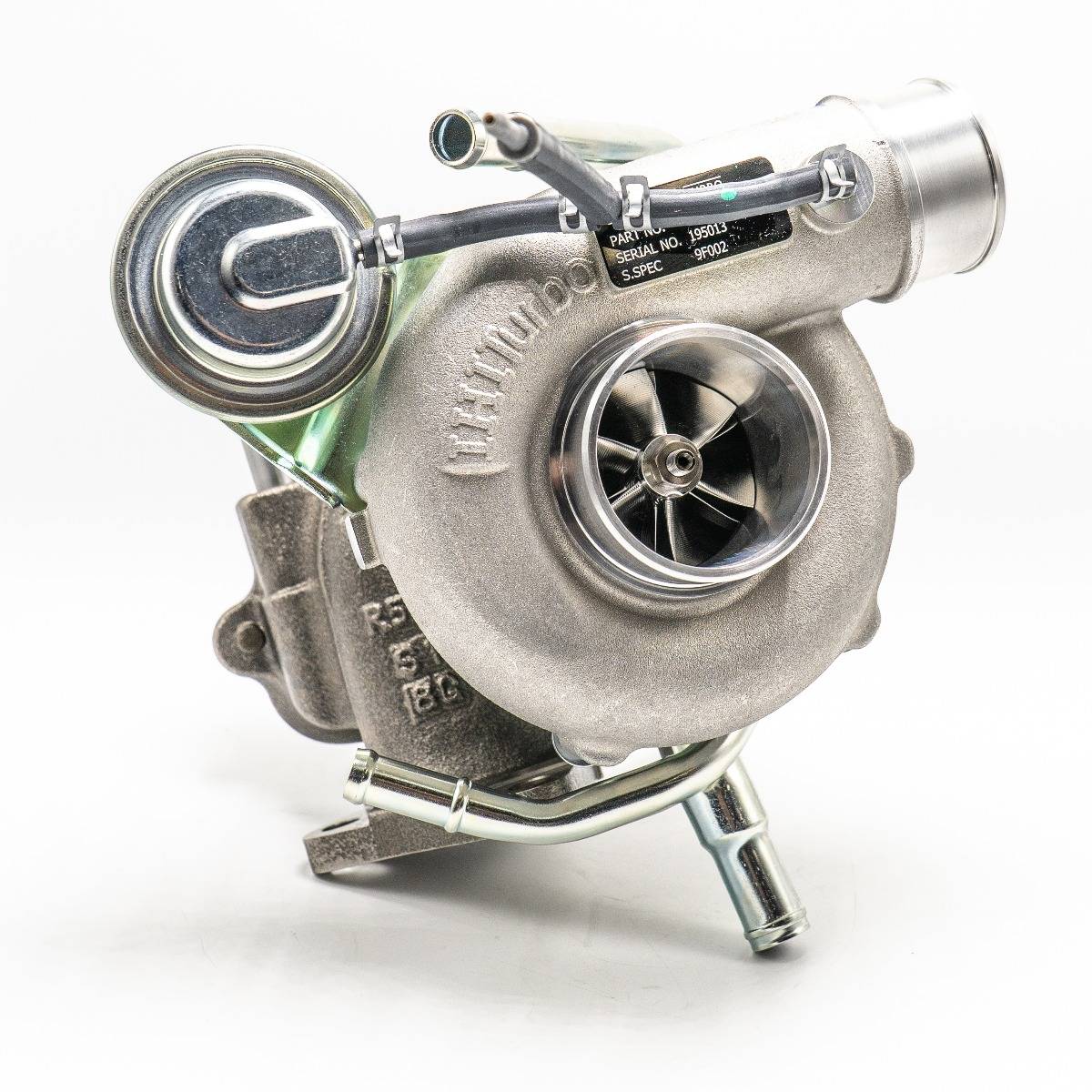 This turbo is a version of the stock STI turbo made by IHI, but uses a redesigned billet compressor wheel. In their testing, it can be used as a replacement for a stock turbo on a 100% stock car. But if you have larger injectors and tune the car, and especially if your car runs E85 instead of pump gas, this turbo has very similar driving characteristics to a stock STI turbo, but with much more power potential.
Cobb TD05 20G - 325 whp pump gas / 350 - 375 whp on E85
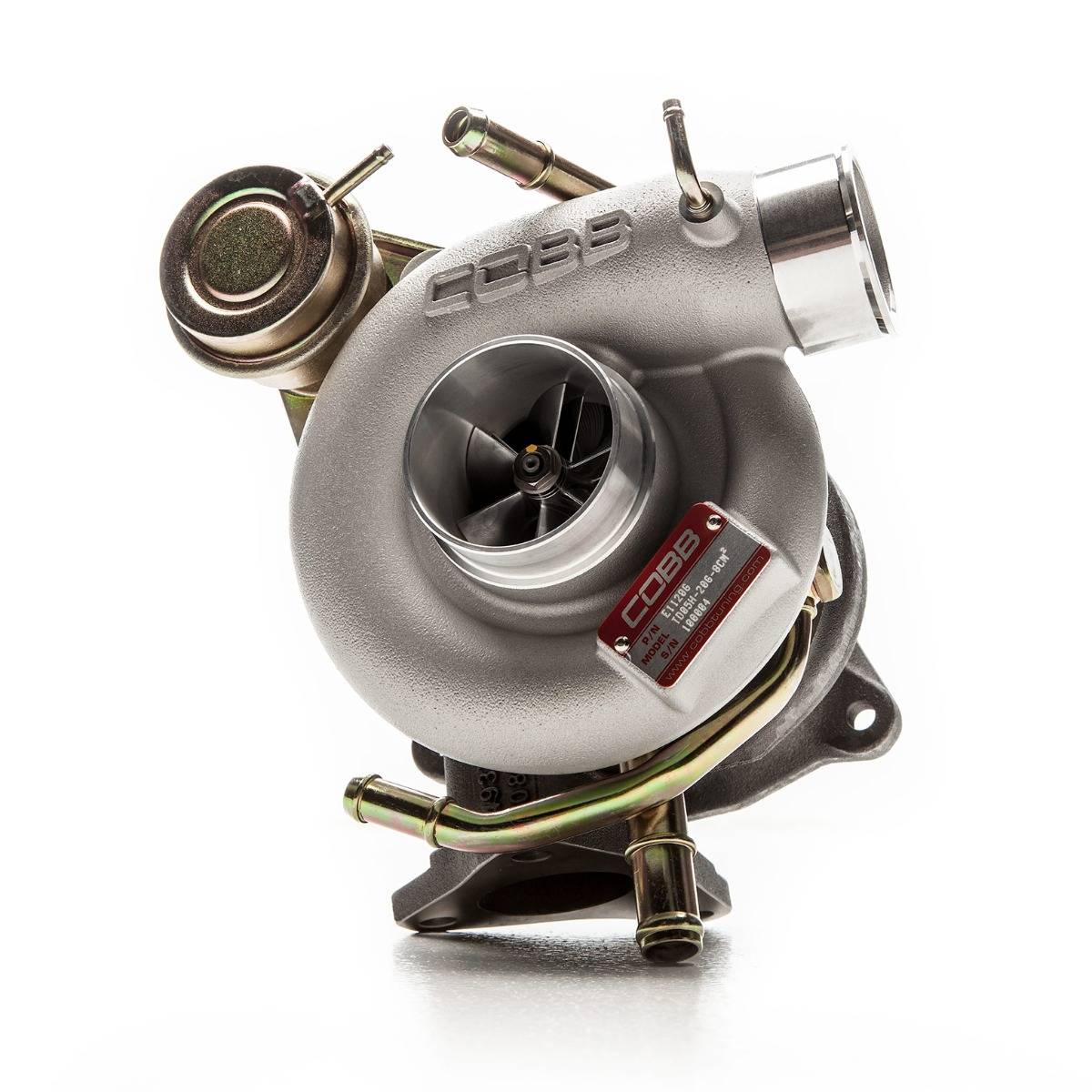 This has been a great option for a bolt-on turbo for an STI with a stock engine. The TD05 hot side is the smallest available for the 20G, so it spools up quickly (this also means it suffers a bit in the upper rpm range) and is a natural progression from the VF48 family of turbos. On E85, this turbo has been a consistent performer with larger injectors with either the STI intercooler or equivalent aftermarket intercooler.
Turbo Dynamics MDX555-400 - 330 whp pump gas / 350 - 375 whp on E85
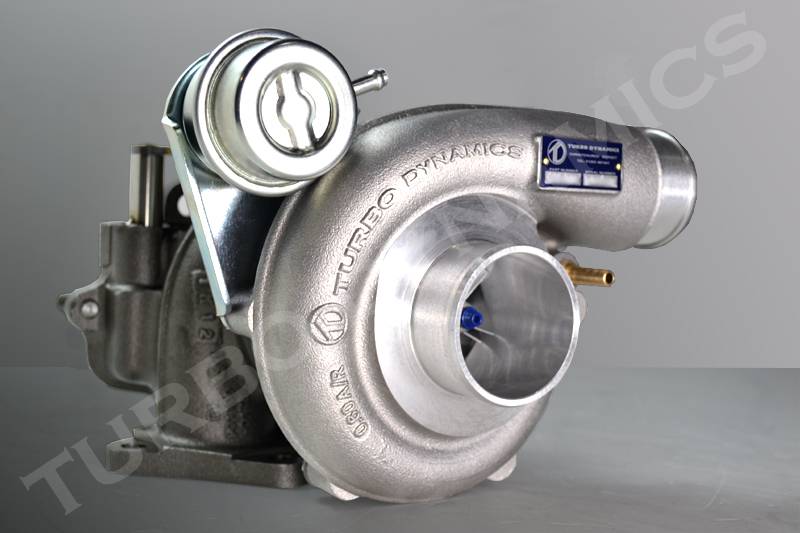
This turbo is built for quick response with a Garrett ball-bearing center section, and a Turbo Dynamics custom hot-side. Because this was designed to be used on 2.0 liter STI's it spools up quickly on the EJ255 or EJ1257 engine, and it has a lot of potential on E85.
Roger Clark RCM-400 330 whp pump gas / 375 - 400 whp on E85
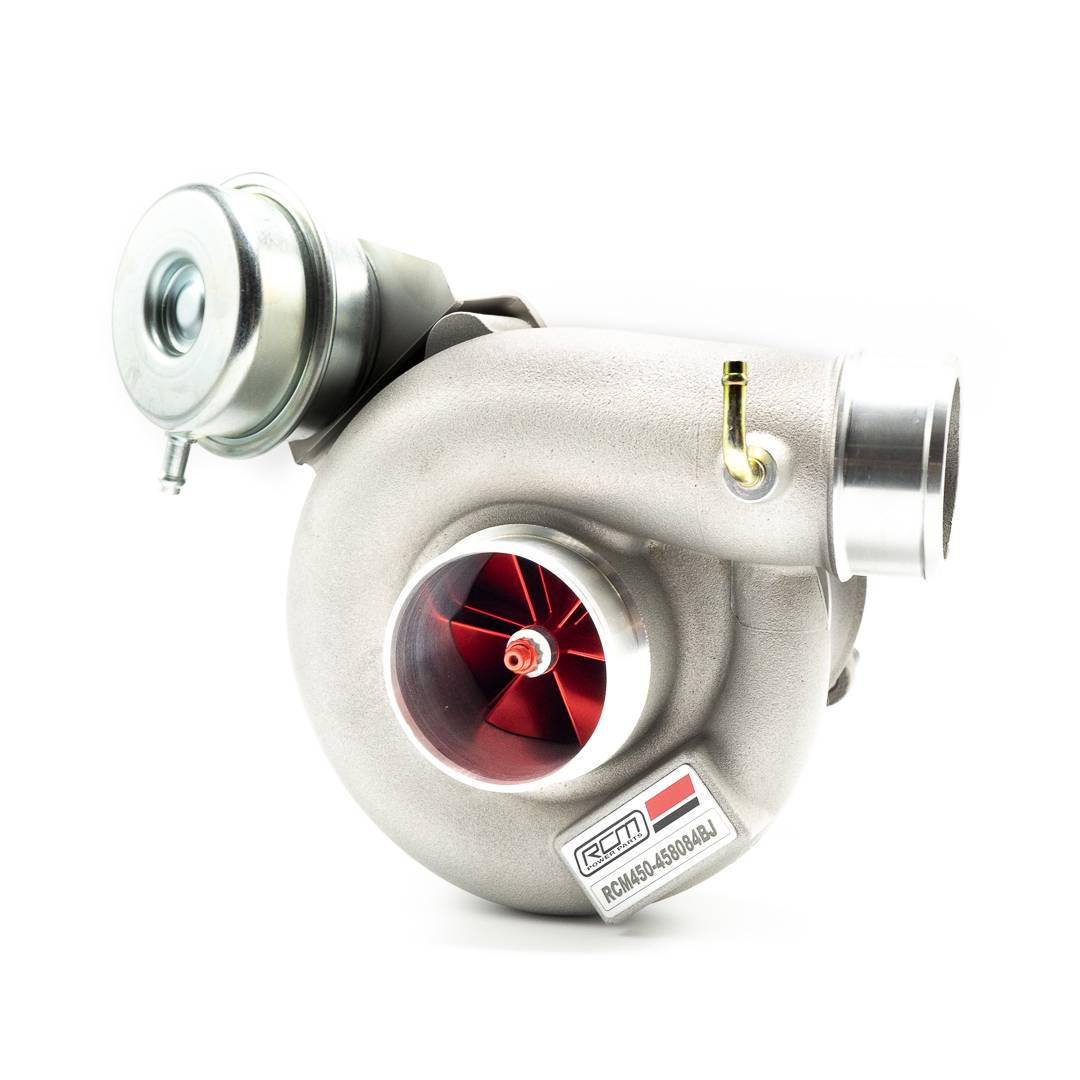
This turbo is based on the Turbo Dynamics MDX555-400, but uses a different compressor wheel. This gives it more power potential than the MDX555-400 but with similar driving characteristics.
Turbo Dynamics MDX555-450 350 whp pump gas / 400+ whp on E85
This turbo uses a Garrett ball-bearing center section and is based on the Garrett 30R family of turbos. It uses the small Turbo Dynamics hot-side for quick spooling characteristics, but has more power potential than the MDX555-400. This turbo has worked really well for us on our Pikes Peak Race Car for a number of years and has worked better than any other turbo we have tried to date.
Blouch Dom 1.5 XTR - 350 whp pump gas / 400+ whp on E85
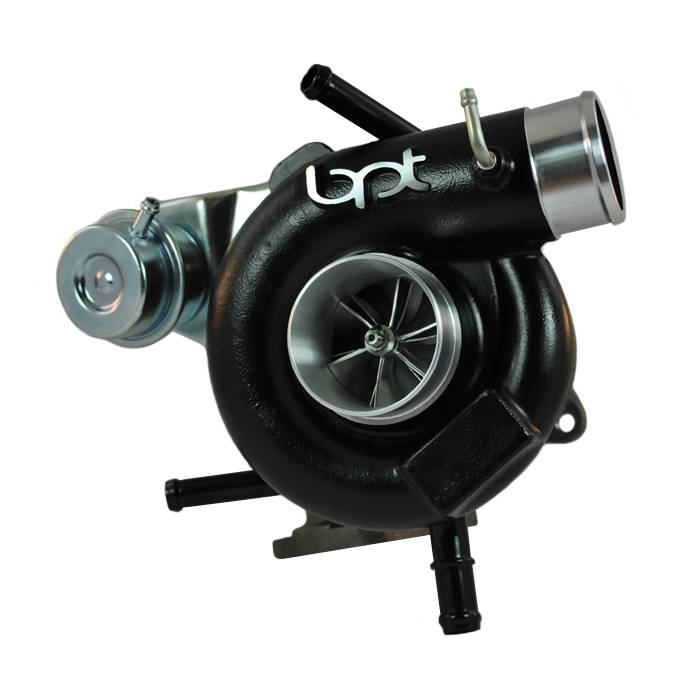 This turbo also uses a ball-bearing center section and we believe that it is based on the Garrett 30R family of turbos similar to the MDX555-450. Blouch has a number of options from inlet size to turbine housing which lets you customize this turbo to make sure that you get just what you want. Generally speaking, this turbo has a larger hot-side than the MDX555-450 (much larger with a 10cm hot-side), so it will not be quite as responsive, but it will generally have a bit better top-end power.
- Jon Cooley

Share on Facebook

Share on X

Share on Pinterest