We use cookies to make your experience better. To comply with the new e-Privacy directive, we need to ask for your consent to set the cookies. Learn more.

Do I need a Catch-Can or an Air-Oil Separator?
November 22, 2021
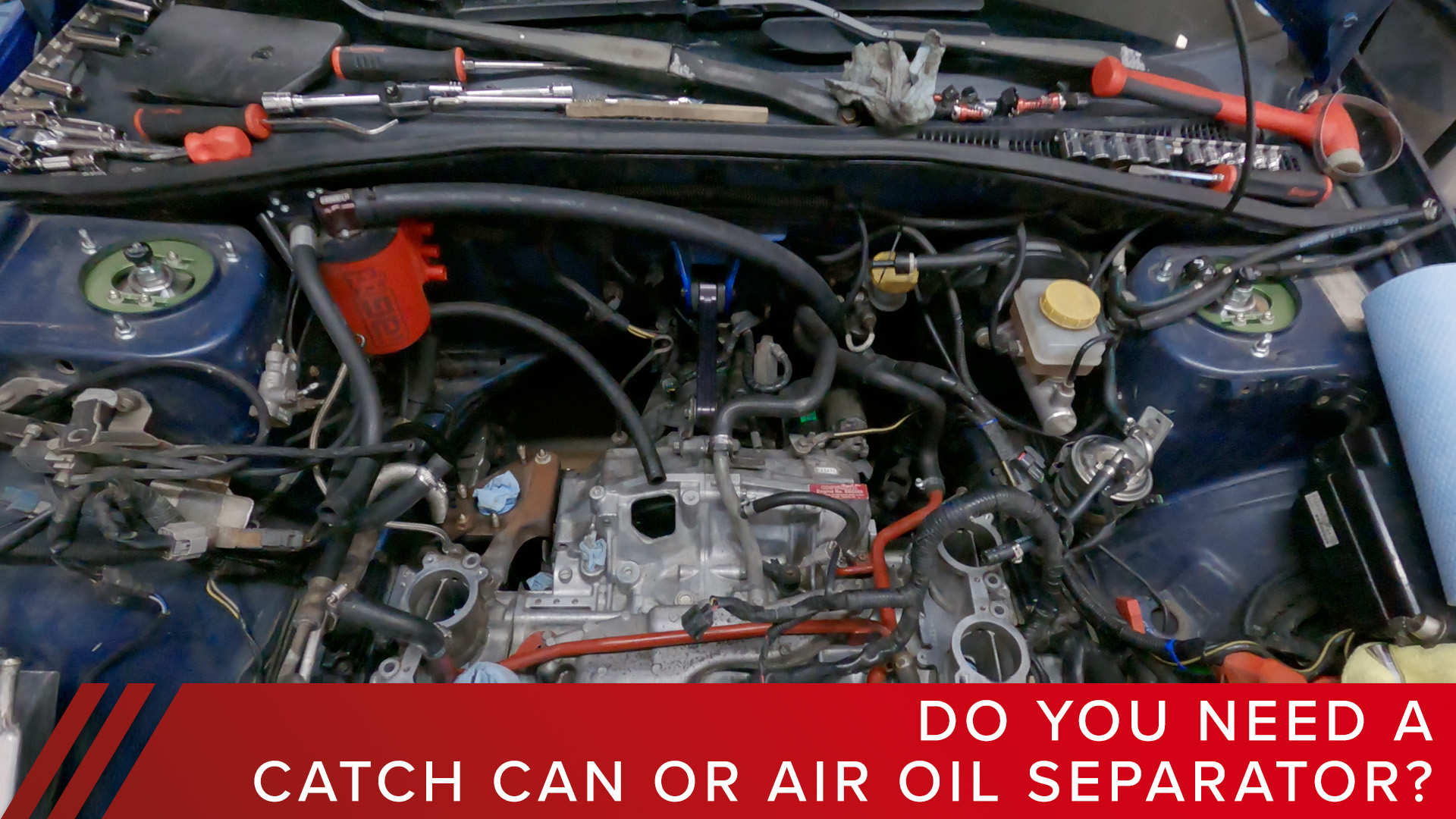
This Question of the Week is one that we get asked very often.
Do I need a Catch Can or an AOS?
The Positive Crankcase Ventilation system (PCV system) connects the crankcase to your engine’s air intake system. If you see signs that oil vapor is working its way through the PCV system and getting to the turbo’s air inlet, installing a Catch Can or Air Oil Separator is the best way to capture that oil before it can get into the engine. But because they are so similar, choosing the best one for your car can be difficult.
In this video we talk about:
00:00 - Question of the Week Intro
00:25 - What does a catch can or AOS do?
00:51 - Why is blow-by bad?
01:33 - What is the difference between a catch can and air oil separator?
02:21 - What problem does a catch can or AOS solve?
02:48 - What can cause positive crankcase pressure?
03:40 - Does every Subaru need a Catch Can or AOS? Or how can I tell if I need one?
04:48 - How do I know if I need a Catch Can or Air Oil Separator?
06:10 - Is an AOS more of a set-it and forget-it solution than a catch can?
07:31 - What would you want to monitor with an Air Oil Separator installed?
If you want to take a look at some of the other videos that we have made on this topic, here are some links to them:
What is the difference between an Air-Oil Separator and a Catch Can?
Taking a look at the Subaru EJ25 Turbo PCV System
An In depth look at what Crankcase Pressure can tell us on a Turbo Subaru Engine
A look at Air Oil Separator Configuration - Recirculating Vs. Atmospheric
Air Oil Separator Vs. Catch Can Part 1 - Getting a Baseline
Thanks for watching and Stay Tuned!
- Jon Cooley

Share on Facebook

Share on X

Share on Pinterest